Carnegie Fabrics Logo
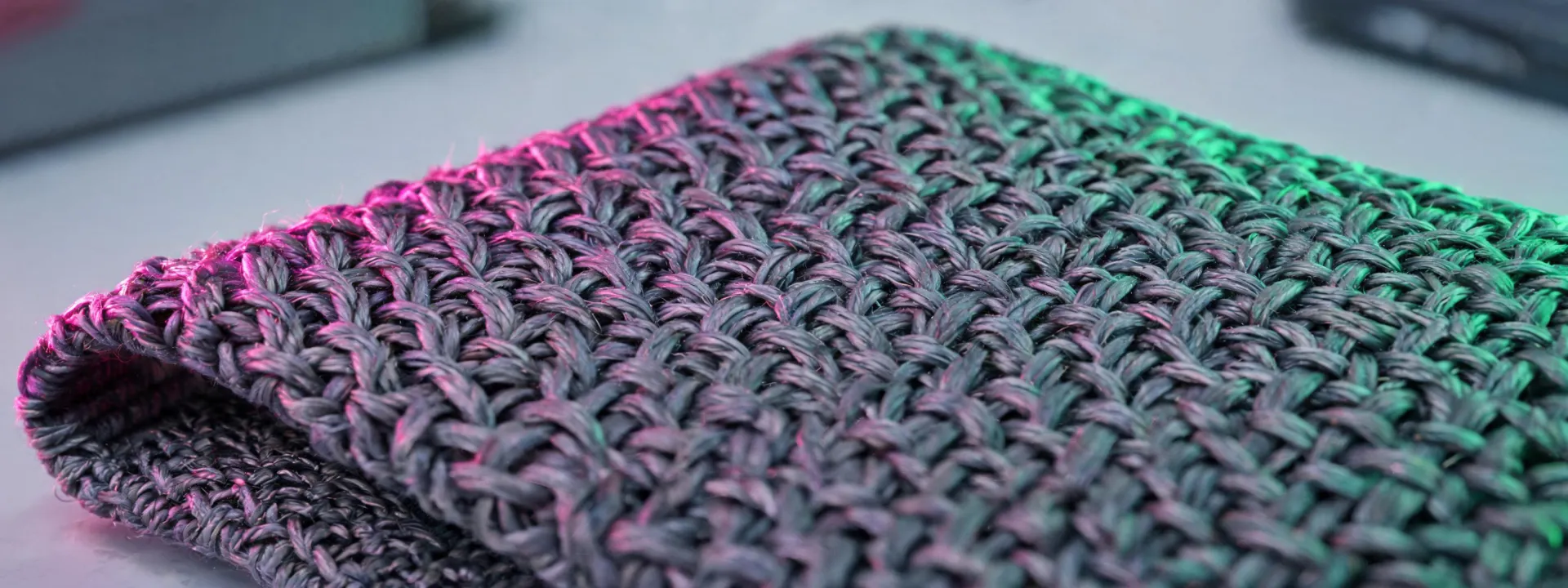
Macro Xorel weave and contract textile construction study

Material Innovation

Carnegie Fabrics innovation needs a construction, not a slogan

Explore how yarn, weave, backing, finish, color route, and application interact. Xorel and other contract surfaces are evaluated product by product, with exact specifications and test context carried into the design decision.

Frame an Innovation Question

Claim boundaries

Separate material architecture from the promise attached to it

An innovative construction may address durability, cleanability, material chemistry, visual expression, or acoustic transparency. Each benefit still needs its own product identity, method, specimen, unit, and applicable document.

Yarn and weave

Useful questions: fiber or polymer content, solution coloration where applicable, yarn geometry, weave construction, surface texture, and dimensional behavior.

Boundary: a platform name alone does not establish identical content, finish, backing, or performance for every pattern.

Backing and interface

Useful questions: direct-applied wall use, seating use, moisture-barrier role, substrate interface, adhesive, breathability, and installation method.

Boundary: a backing option can change the relevant specification and cannot be inferred from the face textile.

Cleaning and durability

Useful questions: named cleaning agent, dilution, dwell time, rinse, frequency, abrasion method, endpoint, and intended application.

Boundary: no single cleaning or abrasion statement predicts service life under every maintenance program.

Material disclosure

Useful questions: exact product scope, document issuer, declared ingredients or attributes, revision date, and chain of evidence.

Boundary: biobased, recycled, PVC-free, PFAS-free, and certified are distinct statements, not interchangeable synonyms.

Natural handfeel or synthetic control

Trade-off: natural fibers can support tactile and breathable design goals, while synthetic constructions can support dimensional stability, strength, and cleanability. Neither route is universally preferable.

Boundary: compare the exact construction, maintenance exposure, durability method, material disclosure, and interior application rather than relying on fiber-family narratives.

Recycled feedstock or virgin consistency

Trade-off: recycled content can advance a circular-material objective, while virgin feedstock may simplify some color and property consistency targets. Both routes carry evidence requirements.

Boundary: verify actual content, declared unit, source or chain-of-custody scope when available, color tolerance, and product-specific performance; do not equate recycled content with recyclability or lower impact in every category.

Evidence architecture

Match the question to the record

The words below describe document functions. They do not assert that every Carnegie Fabrics product carries every record.

01

Product specification

Confirms product name, application, content, usable width, repeat, backing, finish, care route, and test statements for the current construction.

02

Test report

Identifies method, specimen, conditioning, equipment context, units, result, and limits. Compare like methods rather than converting values informally.

03

Disclosure or declaration

Records material or environmental information within a defined scope. Review issuer, revision, declared unit, and product coverage.

04

Installation and maintenance record

Connects substrate preparation, backing, adhesive, seams, cleaning agents, and care steps to the installed surface.

Certification names, certificate numbers, validity dates, and universal collection coverage are intentionally omitted here. Obtain current official documentation for the exact product.
PatternName the product or Xorel construction.
ApplicationState upholstery, wall, panel, window, or another approved use.
MethodKeep units and results with the named procedure.
RevisionUse the current official specification and supporting record.

Advance one product-level question

Ask what changes when the construction or application changes

Share the product reference, surface, backing, substrate, maintenance chemistry, performance method, visual intent, and review deadline. The next step is an exact evidence check, not a broad environmental or performance promise.