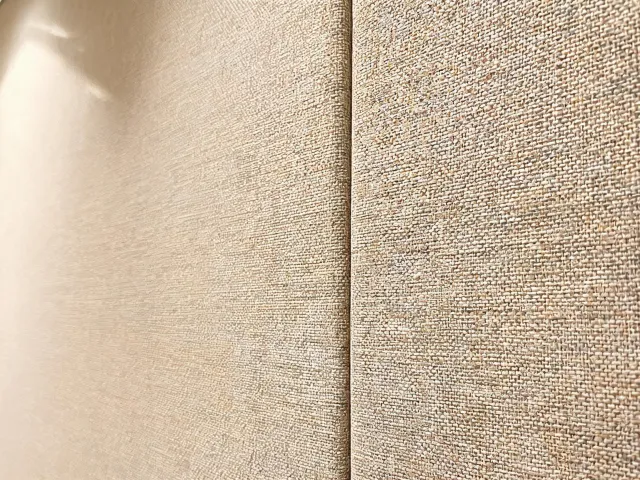
Workplace
Balance visual continuity, upholstery wear, touchpoint cleaning, panel tackability, substrate conditions, and the tested behavior of any complete acoustic assembly.

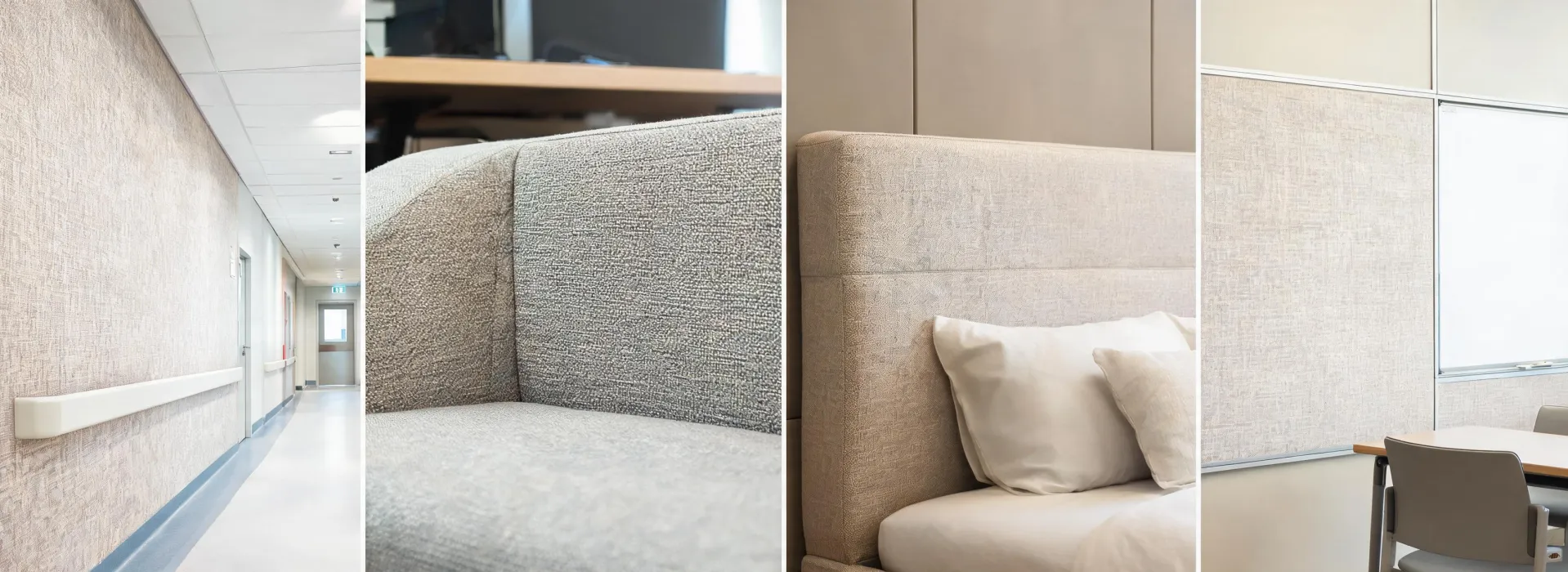
Applications set the evidence threshold
Workplace, healthcare, hospitality, and education share a need for considered surfaces, but they do not share one universal cleaning, abrasion, flame, or acoustic specification.
Application grid
Balance visual continuity, upholstery wear, touchpoint cleaning, panel tackability, substrate conditions, and the tested behavior of any complete acoustic assembly.
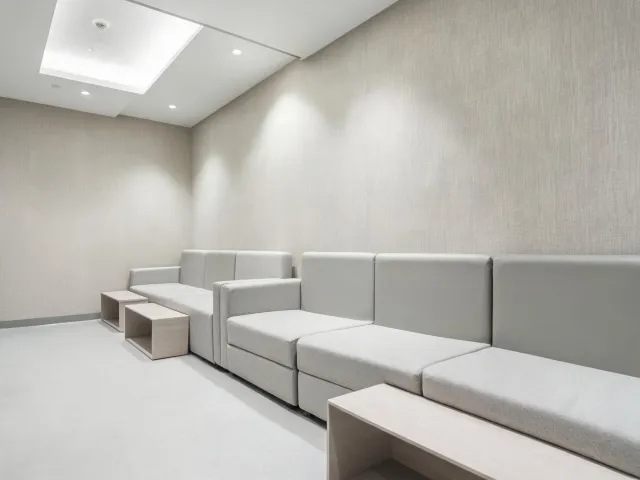
Document cleaning chemistry, concentration, dwell time, rinse instructions, frequency, backing, seam exposure, and any relevant flame or indoor-material record.
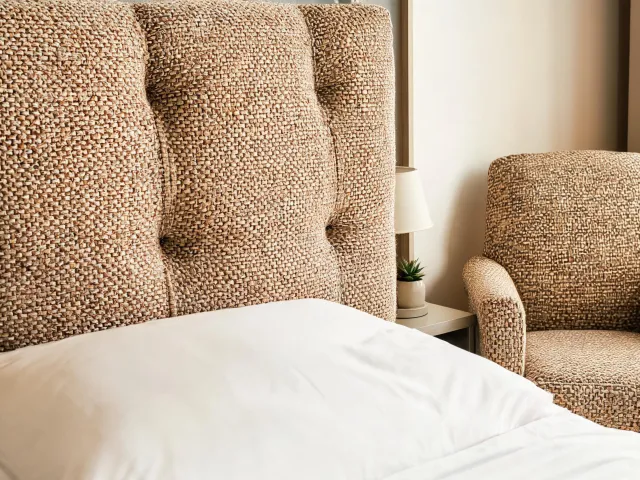
Coordinate pattern scale, repeat, usable width, seaming, hand, abrasion context, stain-management instructions, and visual aging under the intended light.

Review impact and edge exposure, tackability, cleanability, repair strategy, colorfastness, and the boundary between textile performance and panel construction.
Method trade-offs
Use this comparison to shape questions, not to rank products. The product-specific record remains authoritative.
| Decision | What it can show | What it does not prove alone |
|---|---|---|
| Wyzenbeek abrasion | Wear response under a stated oscillatory method and abradant | Equivalent Martindale cycles or actual service life |
| Martindale abrasion | Wear or breakdown under the specified rub motion and endpoint | Wyzenbeek equivalence, cleanability, or seam performance |
| Cleaning compatibility | Response to named chemistry under stated concentration and procedure | Universal resistance to every disinfectant or repeated misuse |
| Textile acoustic transparency | Whether a fabric may allow sound to interact with material behind it | NRC or STC of the complete installed assembly |
| Flame-spread result | Behavior of a stated specimen under a named test method | Every backing, adhesive, substrate, colorway, or installation |
Selection matrix
Ask: pattern, construction, backing, width, repeat, abrasion method, cleaning code, seam plan.
Verify next: exact upholstery specification and maintenance instructions.
Ask: wall condition, backing, usable width, repeat, match, adhesive, cleaning, flame method.
Verify next: current wallcovering specification and installation instructions.
Ask: textile face, substrate, edge, adhesive, tackability, cleaning, assembly performance.
Verify next: textile sheet plus the panel manufacturer's assembly evidence.
Ask: openness, drape, width, repeat, lightfastness, care, hardware interface, project fire requirement.
Verify next: exact window-textile data and applicable project documents.
A better application brief
Include surface type, substrate, traffic, cleaning chemistry, visual scale, governing method, and maintenance expectations.